What Is Coding? A Complete Guide to Coding Careers, AI, Medical Coding & Career Paths What coding really means Coding — sometimes called computer programming — refers to the process of writing instructions that computers can understand using programming languages like Python, JavaScript, and C++. Coding is the core skill behind nearly every piece of...
Coding & TechnologyEntrepreneurship & BusinessWhat Is Coding? A Complete Guide to Coding Careers, AI, Medical Coding & Career Paths

What Is Coding? A Complete Guide to Coding Careers, AI, Medical Coding & Career Paths
What coding really means
Coding — sometimes called computer programming — refers to the process of writing instructions that computers can understand using programming languages like Python, JavaScript, and C++. Coding is the core skill behind nearly every piece of software and digital interaction in the modern world: apps, websites, automation tools, and emerging technologies like artificial intelligence (AI). But beyond traditional software development, coding also includes non-software roles like medical coding, which applies coding in an entirely different industry with real-world impact and employment opportunities. Understanding the diverse ways coding applies in modern careers helps you see why coding isn’t just one job, but a gateway into multiple fields.
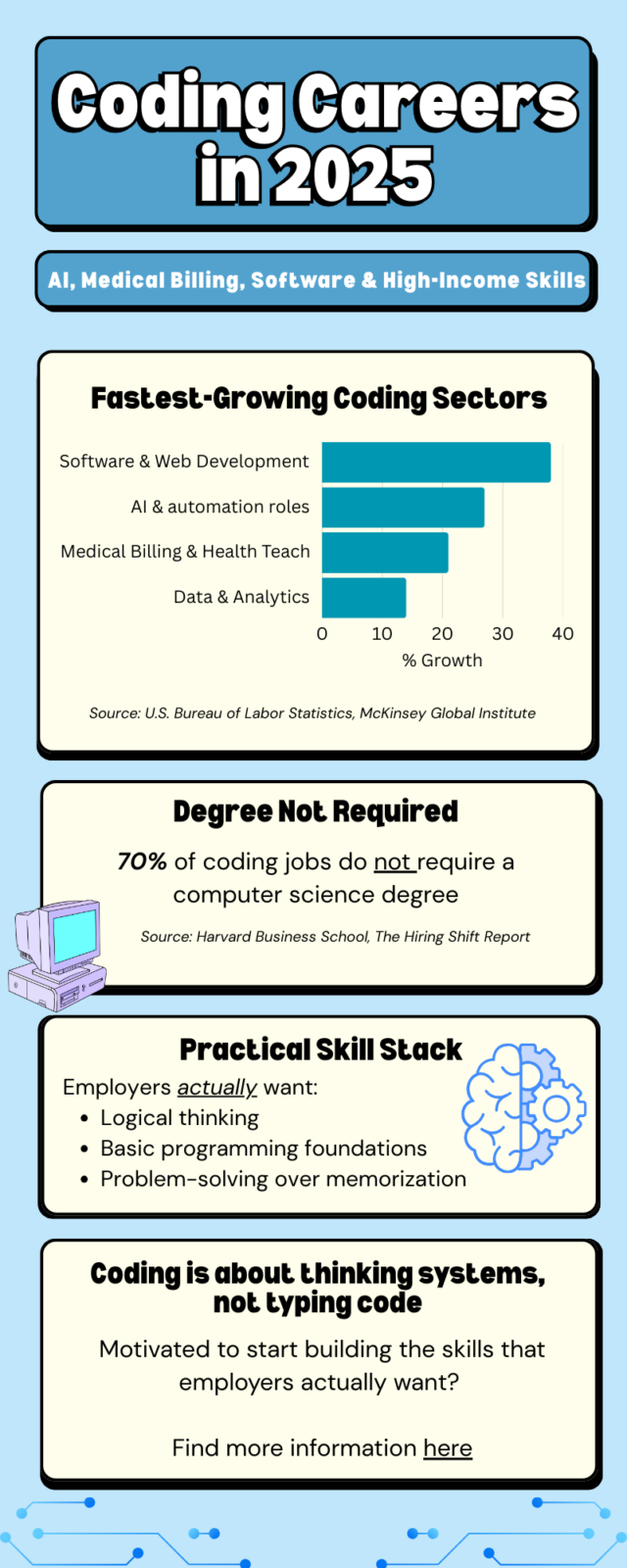
Coding in Technology: Software, Web & AI
When most people think of coding, they think of writing software. Software coders create the programs and systems that power computers and applications. These roles often include web development, mobile app creation, automation scripting, and working with AI models.
In recent years, artificial intelligence has changed what many developers do day-to-day. Tools like GitHub Copilot, ChatGPT, and automated testing suites can assist in writing routine code, allowing experienced coders to focus more on designing systems and solving complex problems. This doesn’t mean AI will replace all coding jobs — but it does mean the nature of coding work is shifting toward higher-level thinking and systems design, rather than typing routine lines of code. (Herzing University)
The technology field still offers strong income potential. For example, technical coders and programmers often see salaries ranging from $62,000 to over $100,000+ annually depending on experience, specialization, and job role. (Coursera)
Medical Coding: A Different Kind of Coding Career
Not all coding careers involve writing software. One of the most stable and in-demand alternatives is medical coding, a healthcare-related profession that doesn’t require building applications but uses coding systems to translate clinical services into standardized codes.
In medical settings, healthcare diagnoses, treatments, and procedures are translated into universal alphanumeric codes (like ICD, CPT, and HCPCS) that support insurance billing, patient records, and health data analytics. These codes help ensure accurate documentation and billing, and play a key role in healthcare administration. (Datavant)
Why medical coding matters
Medical coding is essential because it ensures that healthcare services are correctly tracked and reimbursed. Without precise coding, hospitals and clinics would struggle to collect payment, and medical data analysis (like epidemiological research) would lack consistency.
Earnings and job outlook
A medical coder in the United States can earn around $48,000 to $60,000+ per year on average, with variations based on certification level, experience, and location. (Coursera) Many professionals start with a certificate, diploma, or associate degree, and higher degrees or advanced certification can open doors to specialized or supervisory roles with even higher earning potential. (Research.com)
Remote work is increasingly available in medical coding, especially as healthcare administration becomes more digitized — making this field attractive for people seeking flexible employment without extensive medical training. (AMBCI)
Types of Coding Jobs to Consider
Coding careers come in many forms — from tech to data, from healthcare to automation. While exact job titles and duties vary widely, some common categories include:
- Software Developer / Engineer: Builds and maintains applications and systems.
- Web Developer: Specializes in websites and web apps.
- AI / Machine Learning Coder: Works with models, data structures, and automation tools.
- Medical Coder: Translates clinical services into standardized codes for billing and records.
- Database / Data Engineer: Builds systems to manage and query information.
- Automation / Scripting Specialist: Writes code to automate routine tasks.
These roles differ significantly in skills required and day-to-day work, but all involve translating logic into systems computers or organizations can use.
While the exact number of coding jobs fluctuates with technology trends, learning coding fundamentals remains a valuable foundation, especially when combined with domain knowledge like healthcare, finance, or AI.
How to Get Started in Coding (Tech or Medical)
Tech coding path
For software and AI roles, most people begin with:
- Learning a foundational programming language (Java and Python are the leading choices; Java is particularly powerful for building core object-oriented discipline and preparing for high school AP Computer Science)
- Building simple projects (websites, scripts, apps)
- Practicing logic and algorithms
- Using tools like GitHub to share your work
Hands-on practice and portfolio projects often matter more than formal degrees in many tech coding jobs.
Medical coding path
Medical coding careers typically involve:
- Completing a certificate or associate program focused on medical terminology and coding systems
- Earning professional certifications such as Certified Professional Coder (CPC) or similar credentials
- Gaining practical experience — sometimes through internships or entry-level roles
Certification, while not always required for entry, significantly boosts job prospects and earning potential in this field. (FlexJobs)
What This Means for Your Career in 2026
Coding isn’t a single job — it’s a gateway skill that can lead you into a variety of fields with real income potential. Whether you’re drawn to building next-generation software and AI systems or want a stable, accessible healthcare career like medical coding, there’s a path that fits your goals.
Understanding the difference between types of coding, realistic earning ranges, and growing industries will help you choose a path that aligns with both your interests and the job market. Combining coding fundamentals with domain knowledge (like healthcare or data) can make you even more competitive in a world where both human insight and technical literacy matter.
Ready to Master Real Coding Skills?
Build authentic software engineering confidence with the ArcherSTEM Intro to Coding Workbook. Learn Java syntax, logic structures, methods, and algorithms through hands-on, pen-to-paper problem solving designed for beginners and AP Computer Science students.