Let’s be honest — most of us didn’t learn how to manage money until we were already spending it. I remember opening my first credit card in college, feeling like I’d unlocked a cheat code, only to realize later that I didn’t understand the math behind it. Now, as parents, we have a chance to...
Teacher TrainingHow to Teach Teens to Make Money Fast (the Smart, Math-Driven Way)

Let’s be honest — most of us didn’t learn how to manage money until we were already spending it. I remember opening my first credit card in college, feeling like I’d unlocked a cheat code, only to realize later that I didn’t understand the math behind it.
Now, as parents, we have a chance to change that story. Teaching your teen about money early isn’t about pressure — it’s about freedom. When teens understand how money works, they’re better equipped to make decisions, build independence, and yes, even make money fast — the smart way.
Why Teens Need Financial Literacy Now More Than Ever
According to a 2024 report from Education Week, only 17 U.S. states require a full semester of financial literacy for graduation. That means millions of students are entering adulthood without knowing how interest rates, taxes, or credit scores work.
Money touches every part of life — from college loans to business dreams — yet it’s one of the least-taught subjects in schools. That’s why starting financial literacy conversations at home matters so much.
The key is to make it simple, real, and connected to their world.
Start With Everyday Math (and Keep It Relatable)
Forget lectures. Start with real numbers your teen actually cares about.
-
How much do they spend on coffee or streaming services each month?
-
What would happen if they saved half of that instead?
-
How long would it take to reach $500 if they set aside $25 a week?
Every question like this teaches applied math — percentages, division, multiplication — but in a way that feels personal and empowering.
At ArcherSTEM, we call this approach getting more math that matters. Instead of equations on a whiteboard, students see the math of budgeting, investing, and earning come alive in real decisions.
The “Make Money Fast” Lesson — Reality + Strategy
Every teen wants to know how to make money fast — but most don’t realize that speed without strategy leads nowhere. Help them reframe “fast” as “focused.”
Here’s how:
-
Encourage mini-projects. Whether it’s reselling sneakers, offering tutoring, or creating digital art, let them explore entrepreneurship safely.
-
Track real numbers. Have them calculate expenses, revenue, and profit margins.
-
Reflect together. What worked? What didn’t? What could they do differently next time?
This process teaches the foundation of entrepreneurship: observe, act, measure, adjust. It’s the same logic they’ll use later in careers, investments, or business ownership.
Integrate Financial Literacy into Your Family Curriculum
Financial literacy doesn’t have to be another “thing” to squeeze into the week. It can blend naturally into your family’s routine — through grocery trips, bill discussions, or small budgeting challenges.
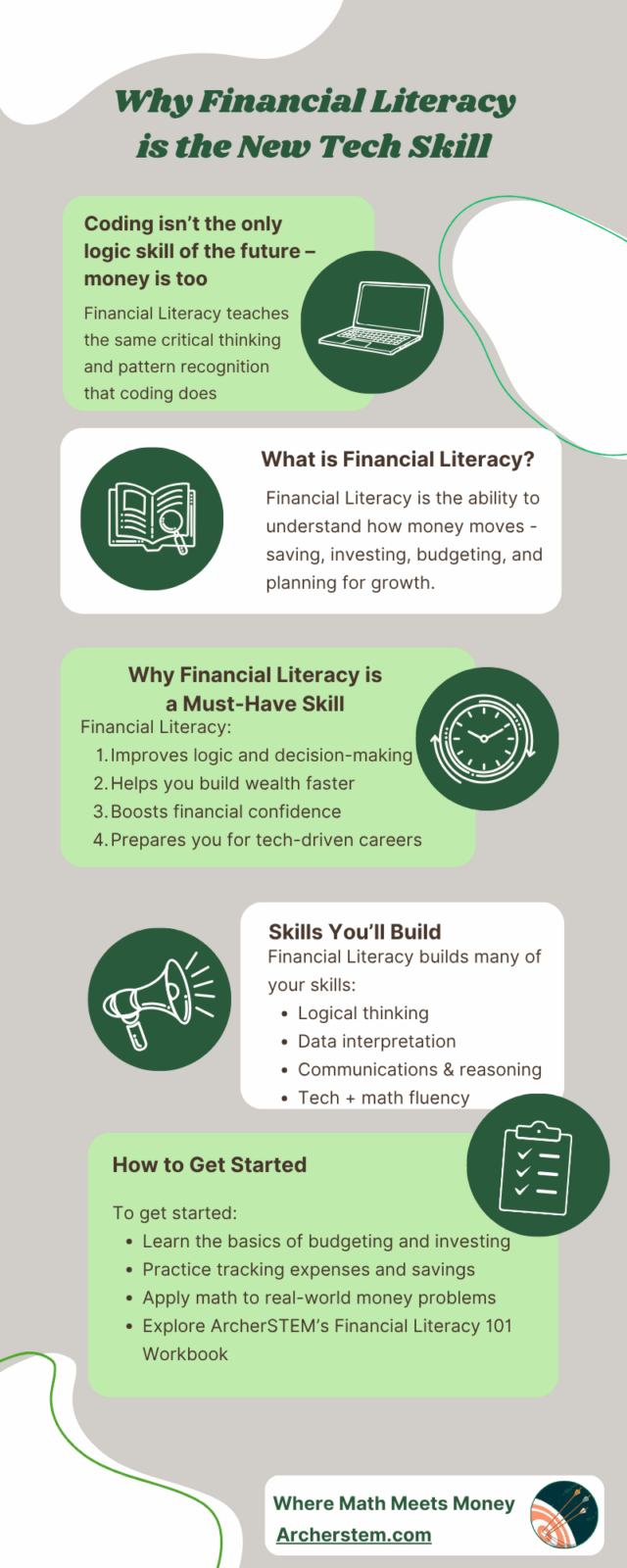
That’s why the ArcherSTEM Financial Literacy 101 Workbook is designed as a flexible home curriculum. Each chapter takes real-life concepts — like credit, saving, and taxes — and turns them into quick, engaging activities that spark conversation. Teens learn to connect their decisions to long-term outcomes, while parents get an easy guide to follow along.
It’s not about teaching perfection — it’s about modeling confidence.
How Financial Literacy Builds Character (Not Just Savings)
Financial education isn’t only about dollars; it’s about discipline, patience, and planning. When teens learn to budget, they’re learning self-control. When they invest or save, they’re learning delayed gratification.
These aren’t just financial skills — they’re life skills.
Studies by the National Financial Educators Council show that students who engage in consistent money discussions are 65% more confident in decision-making and 40% less likely to overspend impulsively. That’s real growth — emotional, academic, and personal.
Final Thoughts & CTA
If there’s one thing I’ve learned, it’s that money lessons hit deeper when they come from home. You don’t need to be a financial expert — you just need to start the conversation.
When parents teach financial literacy, they’re not just explaining numbers; they’re handing their kids a compass.
Want an easy way to start?
Check out our Financial Literacy 101 Workbook — a parent-friendly guide that helps teens understand money, apply math, and build real-world confidence.