Why Financial Literacy Is the Most Important Skill No One Teaches Let’s start with something uncomfortable. Most students graduate knowing how to solve quadratic equations —but not how interest works on a credit card. That’s not a coincidence.That’s a systemic gap. And the data proves it. Schools Are Not Teaching Money — The Numbers Don’t...
Money & Personal FinanceWhy Financial Literacy Is the Most Important Skill No One Teaches

Why Financial Literacy Is the Most Important Skill No One Teaches
Let’s start with something uncomfortable.
Most students graduate knowing how to solve quadratic equations —
but not how interest works on a credit card.
That’s not a coincidence.
That’s a systemic gap.
And the data proves it.
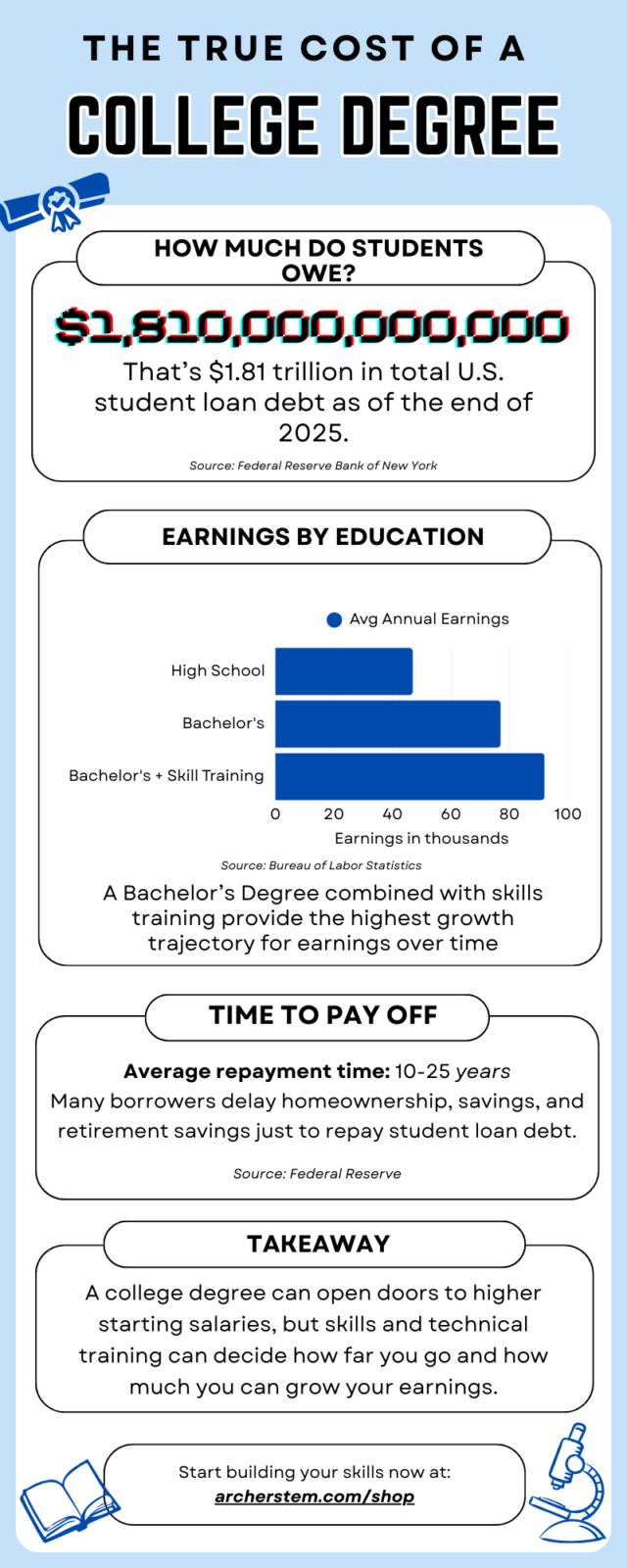
Schools Are Not Teaching Money — The Numbers Don’t Lie
According to the Council for Economic Education (CEE):
-
Only half of U.S. states require a standalone personal finance course for high school graduation
-
Even fewer require it to be tested or assessed meaningfully
That means millions of students leave school every year without formal instruction in:
-
Budgeting
-
Credit
-
Debt
-
Saving
-
Investing
(Source: Survey of the States, Council for Economic Education)
Students Are Financially Unprepared — By the Data
The FINRA National Financial Capability Study found that:
-
Only 34% of adults can correctly answer basic questions about interest, inflation, and risk diversification
-
Young adults score lower than older generations on financial literacy assessments
(Source: FINRA Investor Education Foundation)
This isn’t about motivation or intelligence.
It’s about missing instruction.
Financial Mistakes Early in Life Have Long-Term Consequences
The Federal Reserve reports that:
-
Over 40% of Americans would struggle to cover a $400 emergency
-
Credit card balances and delinquency rates are rising fastest among adults under 35
(Source: Federal Reserve Economic Well-Being of U.S. Households)
Without early financial education, people don’t “figure it out later.”
They pay for it later — with interest.
Why This Gap Exists (And Why It Keeps Growing)
Financial literacy is often excluded because:
-
It is not consistently tested at the state level
-
Schools face shrinking budgets and staffing shortages
-
Teachers are rarely given ready-to-use curriculum
-
Math and English receive priority due to standardized testing
According to EdWeek, many districts cite lack of curriculum support as the main barrier to teaching financial literacy — not lack of interest.
(Source: Education Week, K–12 Financial Literacy Coverage)
The Skill Gap Schools Don’t Talk About
The OECD (Organization for Economic Cooperation and Development) reports that:
-
Financial literacy is strongly correlated with economic mobility
-
Students who receive financial education earlier demonstrate better long-term decision-making
(Source: OECD Financial Literacy Framework)
In other words:
Financial literacy isn’t optional — it’s predictive.
What Financial Literacy Should Actually Teach
National frameworks like the National Standards for Personal Financial Education outline core competencies:
-
Income & career planning
-
Credit & debt management
-
Saving & investing
-
Risk management & insurance
-
Financial decision-making
Yet most students encounter these concepts after financial damage is already done.
Why I Built Financial Literacy Resources
I didn’t create ArcherSTEM workbooks because students are “bad with money.”
I created them because:
-
The system leaves gaps
-
Families are forced to teach this alone
-
Teachers need plug-and-play resources, not extra prep
Our workbooks translate standards into real-world actions, not theory.
What Makes ArcherSTEM Different
The Financial Literacy Activity Workbook is built around:
-
Real scenarios (credit cards, budgeting, debt decisions)
-
Visual learning (charts, breakdowns, comparisons)
-
Interactive activities instead of lectures
-
Alignment with national personal finance standards
This makes it usable for:
-
Middle & high school classrooms
-
Homeschool families
-
After-school programs
-
Community and nonprofit education
The Bottom Line
Financial literacy is not “extra.”
It determines:
-
Stress levels
-
Financial freedom
-
Career flexibility
-
Long-term stability
Until it’s fully embedded in schools, families will keep paying the price.
That’s why these resources exist.
Want ready-to-use financial literacy worksheets aligned to real standards?
👉 Financial Literacy Activity Workbook
https://archerstem.com/product/financial-literacy-activity-workbook/
Explore all resources: