Active Steps to Build Credit and Keep It Strong for Life Credit is more than a number. It’s your reputation with money. It shapes where you live, what you drive, how much you pay for insurance, and even your job opportunities. Yet, most people were never taught how to manage it. Whether you’re starting from...
Teacher Training7 Active Steps to Build Credit and Take Control of Your Finances
Active Steps to Build Credit and Keep It Strong for Life
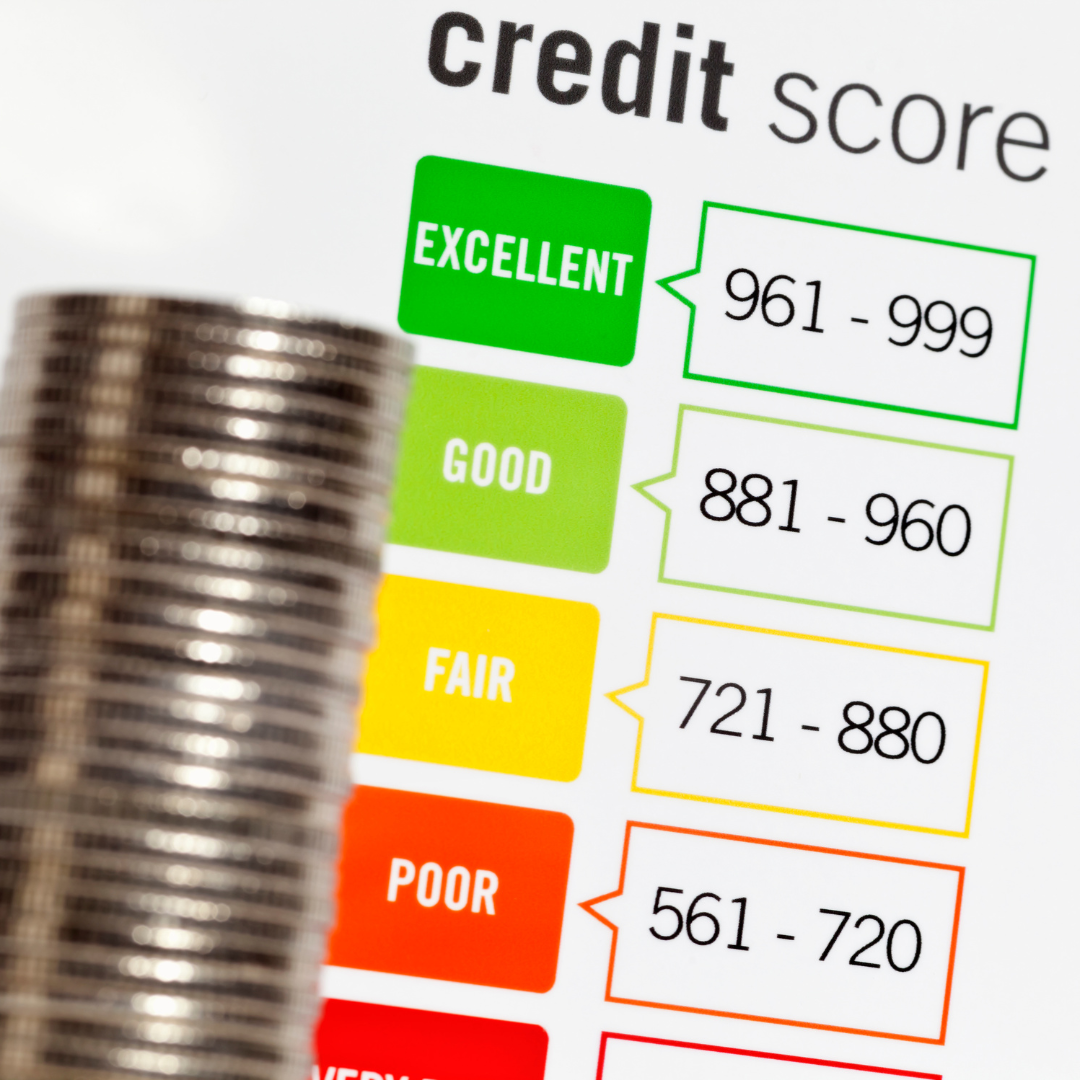
Credit is more than a number. It’s your reputation with money. It shapes where you live, what you drive, how much you pay for insurance, and even your job opportunities. Yet, most people were never taught how to manage it.
Whether you’re starting from scratch, rebuilding, or just trying to strengthen your financial standing, building credit is about structure and consistency. These steps will help you get there with confidence.
1. Start with the Right Card
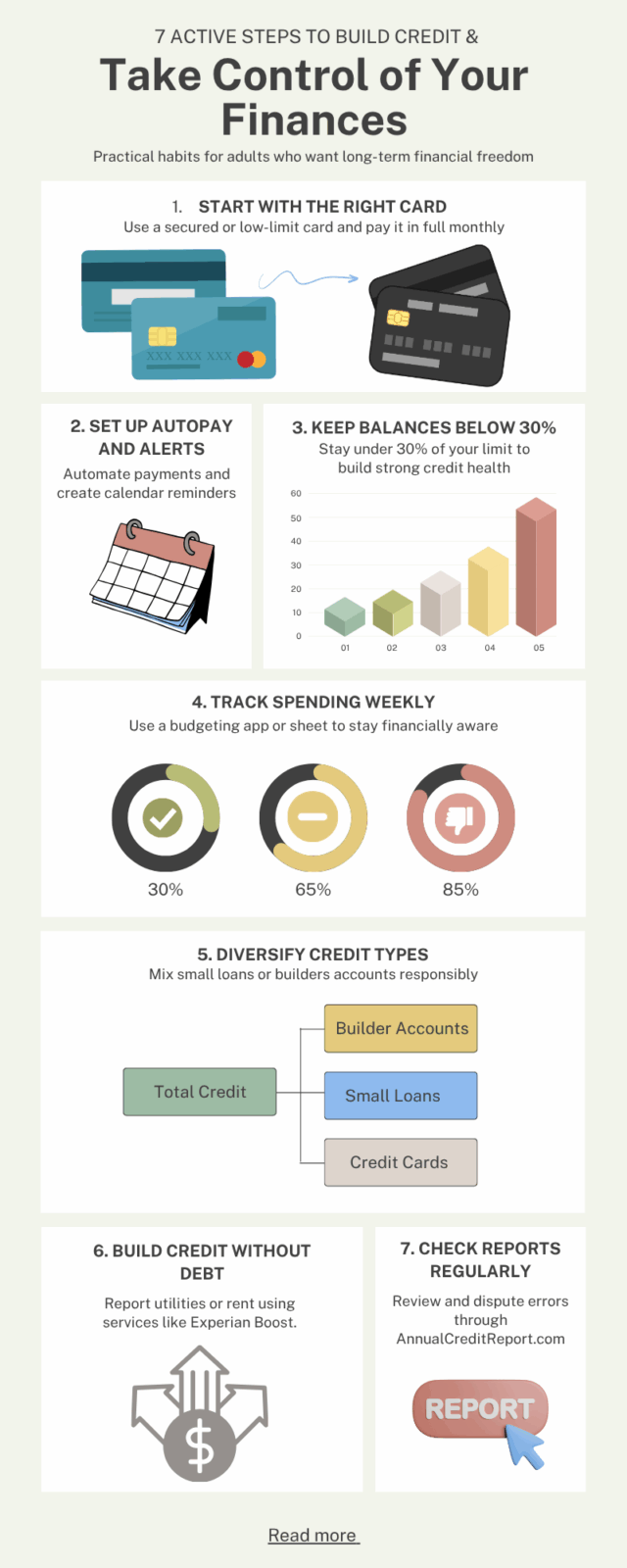
Start small. A secured or low-limit credit card is an ideal first step. Use it for predictable purchases like groceries or subscriptions, then pay the balance off in full each month.
Choose a card that reports to all three major credit bureaus—Experian, TransUnion, and Equifax—so your on-time payments actually build your record.
2. Set Up Autopay and Alerts
Missed payments are the fastest way to hurt your score. Even one can lower it dramatically. Set up autopay to cover at least the minimum payment and schedule alerts before each due date.
Credit strength comes from reliability, not risk-taking. Paying on time every month is your foundation.
3. Keep Your Balance Below 30 Percent
If your limit is $1,000, keep your balance under $300. This ratio, called credit utilization, plays a major role in your score.
Low utilization signals control and responsibility. It shows you can borrow without depending on credit.
4. Track Your Spending Every Week
Financial awareness is half the battle. Use an app like Rocket Money, YNAB, or a spreadsheet to track where your money goes.
Monitoring your spending regularly helps you spot bad patterns and adjust quickly. You can’t fix what you don’t see.
5. Diversify Your Credit Types
Once you’ve proven consistent payments with a credit card, consider adding variety. Lenders like to see you manage different credit types, such as a small personal loan, car note, or credit-builder account.
Diversity builds credibility, but keep it realistic. Never take on more than you can handle.
6. Build Credit Without Debt
You can grow your score without taking new loans. Platforms like Experian Boost or Self allow you to report rent, phone, or utility payments to credit bureaus.
These consistent monthly payments can strengthen your score safely while rewarding your daily responsibility.
7. Review Your Credit Reports Regularly
Visit AnnualCreditReport.com to access a free report from each bureau once a year. Check for errors, outdated information, or accounts you don’t recognize.
Even small mistakes can cost you points, so make this a habit. Correct any issues immediately and consider freezing your credit when not in use for extra security.
Final Thoughts
Good credit doesn’t come from perfection—it comes from planning. It’s a reflection of discipline, awareness, and steady habits that prove you can manage money wisely.
That’s exactly what the ArcherSTEM Financial Literacy Workbook was designed to teach: how to turn abstract financial terms into real actions.
If you’re ready to strengthen your financial foundation, explore the Financial Literacy Workbook today at www.archerstem.com. Learn the systems that make financial freedom possible.